
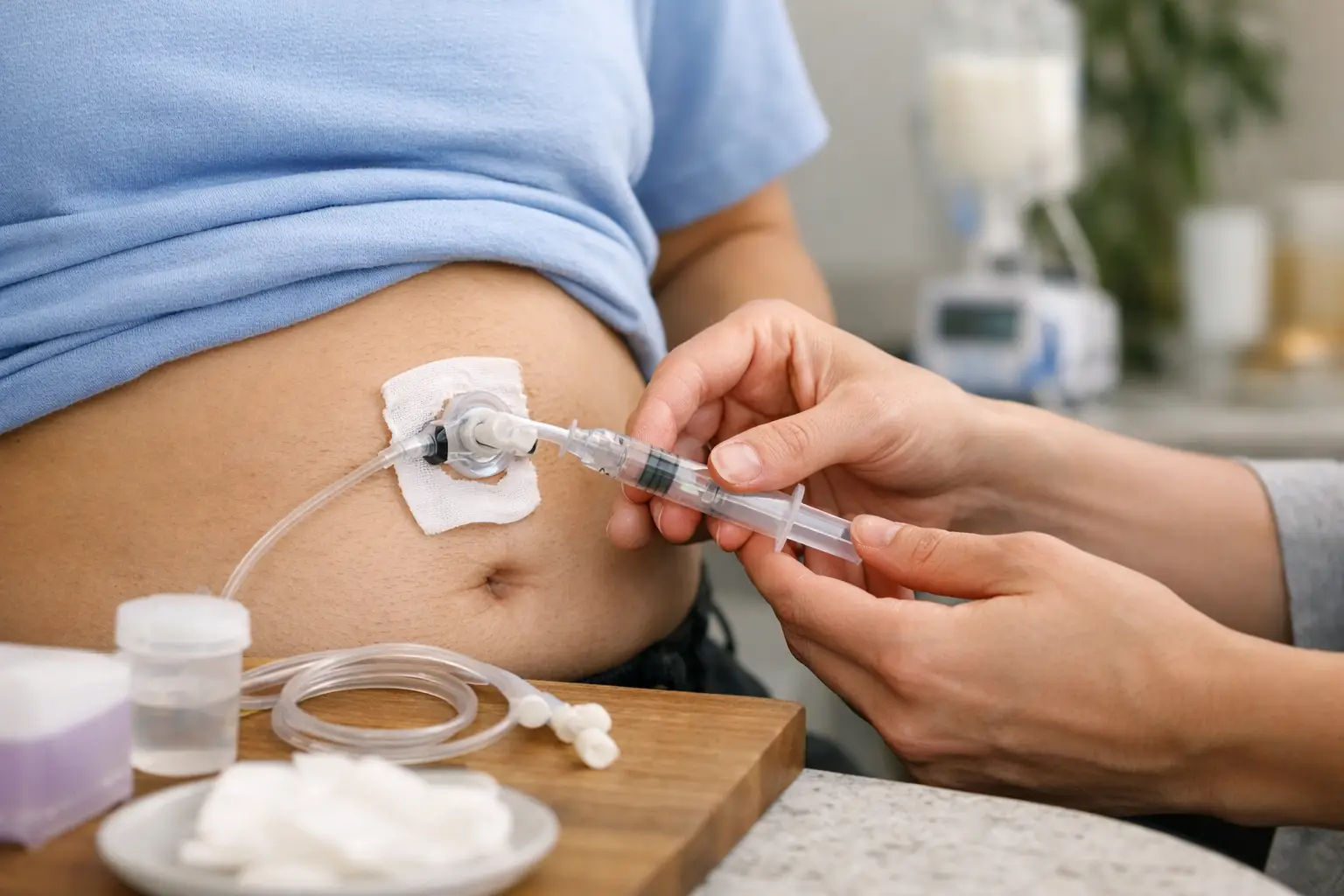
A feeding tube can make it possible for a loved one to receive essential nutrition, fluids and medicines while remaining in the comfort of home. Following clear feeding tube care steps helps protect their health, reduce discomfort and give families greater confidence between clinical visits. The routine will vary according to the tube type and the patient’s medical plan, so the instructions provided by the treating clinician must always come first.
Start with the patient’s individual care plan
Feeding tubes may be passed through the nose into the stomach or bowel, or placed through the abdominal wall, such as a gastrostomy tube. These tubes are cared for differently. A plan for a nasogastric tube, for example, may include placement checks before feeds, while a gastrostomy tube requires close attention to the skin around the stoma.
Before taking over any part of care at home, ask the nurse to demonstrate the routine and watch you repeat it. You should know the prescribed feed, amount, rate, water flush schedule, medicine instructions, positioning requirements and whom to call out of hours. Keep these details written somewhere accessible to every family member involved in care.
Do not alter the feed volume, speed or timing because the patient seems hungry, tired or uncomfortable. Changes may be needed, but they should be made by the doctor, dietitian or qualified nurse who understands the patient’s nutritional and clinical needs.
Feeding tube care steps before every feed
A calm, clean preparation protects both the patient and the tube. Gather everything you need before beginning, including the prescribed feed, feeding equipment, syringes, prescribed water for flushing and any medicines due at that time. Check the expiry date and storage instructions for feed and medication.
Wash your hands thoroughly with soap and water before touching the tube, feed container or connectors. Clean the preparation surface, and use only equipment that is clean and intended for enteral feeding. Formula left at room temperature for too long can support bacterial growth, so follow the product and clinical team’s guidance on how long an opened container or decanted feed can be used.
Positioning matters. In most cases, the patient should be sitting upright or supported with their upper body raised during feeding and for the period afterwards advised in their care plan. This lowers the risk of reflux and aspiration, where feed enters the lungs. Never begin a feed if the patient is lying flat unless their clinician has specifically instructed you to do so.
For a tube that passes through the nose, follow the clinician’s specific method for checking placement before feed or medicines. Do not rely on listening for air pushed through the tube, as this is not a safe confirmation method. If the tube marking at the nostril has changed, the patient is coughing persistently, breathless, distressed or you cannot confirm placement as trained, stop and seek urgent clinical advice.
For a gastrostomy or jejunostomy tube, inspect the external tube and skin site. Look for new redness, swelling, leaking, soreness, bleeding, unusual discharge or an unpleasant smell. Small differences can be significant, particularly for frail older adults, young children and patients with diabetes or reduced immunity.
Giving feed safely and comfortably
Use the feeding method prescribed for your loved one, whether that is a pump, gravity feed or syringe bolus feed. The method is chosen for a reason: some patients tolerate smaller, slower feeds, while others need continuous feeding because of their condition or the tube position.
Flush the tube with the prescribed amount of water before and after feeds. This helps keep the tube clear and supports hydration where appropriate. Use the type and quantity of water specified in the care plan, especially for infants, people with kidney or heart conditions, or anyone on fluid restrictions.
During the feed, stay alert to how the patient looks and feels. Pause the feed and contact the clinical team if they develop nausea, vomiting, repeated coughing, choking, abdominal pain, unusual bloating, diarrhoea, sweating, paleness or breathing changes. These symptoms do not always mean the same thing. They may relate to feeding speed, constipation, infection, medication, tube position or an issue that needs medical assessment.
Avoid rushing. A feed delivered too quickly can cause discomfort and poor tolerance, even if the total prescribed amount is correct. Equally, do not slow, dilute or stop feeds routinely without advice, as this can affect the patient’s nutrition and hydration.
Giving medicines through a feeding tube
Medicines need particular care. Ask the pharmacist, doctor or nurse which medicines can be given through the tube and whether a liquid version is available. Some tablets must not be crushed because doing so changes how the medicine works or may cause harm.
Give each medicine separately unless a clinician or pharmacist has specifically confirmed that they can be combined. Flush the tube before the first medicine, between medicines and after the last one, following the prescribed water volumes. Mixing medicines into feed can block the tube and makes it difficult to know whether the patient has received the full dose.
Daily skin, mouth and tube care
The tube itself is only one part of comfort and infection prevention. For a gastrostomy site, clean and dry the surrounding skin according to the instructions from the treating team. Once the site has healed, this may often be part of normal daily washing, but newly placed tubes and irritated sites may need different care. Do not apply creams, powders or dressings unless they have been recommended.
Check that the external fixation device is sitting as advised. A tube that is too tight can damage skin, while one that is too loose may leak or move excessively. Do not rotate, advance, pull back or replace a tube unless you have been taught to do this for that specific device.
Patients fed by tube still need regular mouth care. Brush teeth, gums and tongue gently where possible, moisturise dry lips and encourage any safe oral care recommended by the clinician. Good oral hygiene supports dignity, comfort and overall health, even when a patient is not eating or drinking by mouth.
Keep nasal tubes secured as instructed and check the nostril, cheek and ear area for pressure marks. Reposition tape only if you have been shown how. A tube that rubs against the skin can cause painful breakdown surprisingly quickly.
Preventing and responding to blockages
Regular prescribed flushes are the best protection against blockage. If the tube becomes difficult to flush, do not force water through it. Pressure can damage the tube or cause it to split. Do not use fizzy drinks, sharp objects or improvised methods to clear it.
Contact a qualified nurse or the treating team for advice. They can assess whether a safe declogging approach is appropriate or whether the tube needs replacement. Until you have instructions, keep a record of any missed feed, fluid or medication, as this may affect the next steps.
A tube that comes out, cracks, leaks heavily or appears displaced requires prompt advice. For some stoma tubes, the opening can begin to close within hours, so families should know in advance exactly whom to contact and what emergency plan applies. Do not attempt to reinsert a tube unless you are trained and have been expressly authorised to do so.
When to seek urgent medical help
Call emergency services or seek urgent medical assessment if the patient has severe breathing difficulty, blue lips, loss of consciousness, severe chest pain, uncontrolled bleeding, severe abdominal pain, repeated vomiting, signs of a serious allergic reaction or a sudden significant deterioration.
Contact the clinical team promptly for fever, spreading redness around a stoma, pus-like discharge, persistent leakage, increasing pain, diarrhoea that continues, constipation with discomfort, unexplained weight change or concerns that the tube has moved. Trust your observations. Family members often notice subtle changes in behaviour, alertness or comfort before they become more obvious clinical symptoms.
Keeping care consistent at home
A simple written record can make feeding tube care safer when more than one person helps. Note the feed and water given, medicines administered, flushes, bowel movements, vomiting or coughing episodes, skin changes and any calls made for advice. This gives visiting clinicians a clearer picture and helps identify patterns, such as discomfort after a certain feed time or recurring constipation.
Professional home nursing can also provide reassurance after discharge, during recovery or when needs become more complex. CareXperts’ DHA-licensed nurses can support families with clinically guided feeding routines, monitoring and compassionate education in the home, while keeping the patient’s comfort and dignity at the centre of care.
The goal is not for families to manage every concern alone. With the right training, a clear care plan and timely professional support, tube feeding can become a safe, steady part of home life while your loved one remains close to the people who know them best.